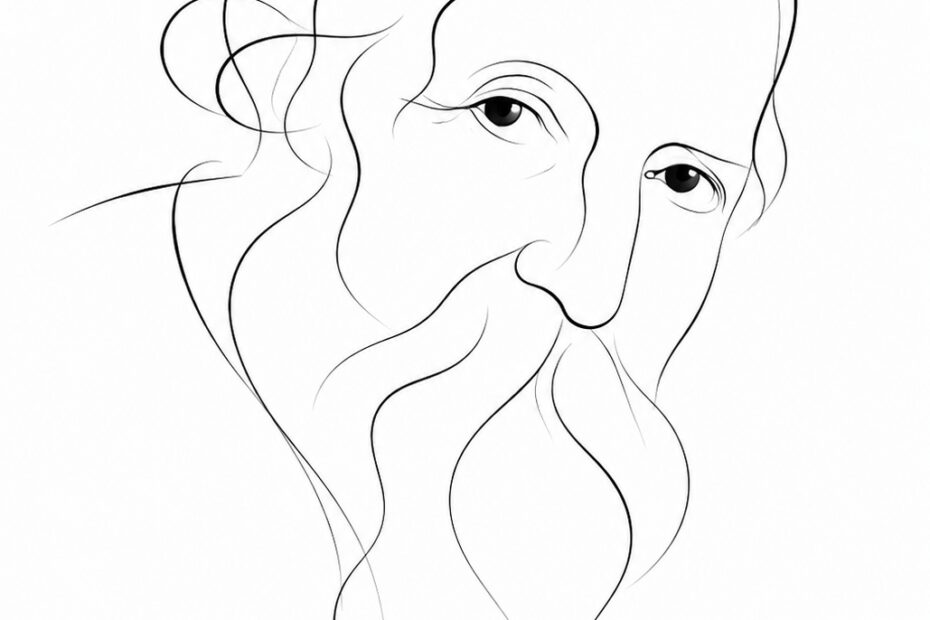
One hundred years ago, Martin Buber wrote the book „I and Thou“ in which he made a distinction between two ways we relate to the world. The first “I-It” is the instrumental and transactional mode. It is most common when we measure, categorize, use, and objectify. Today, we would say “evidence-based” and “measurable-outcome-optimized.” The second is “I-Thou,” those rare moments of human encounter which cannot be arranged or planned, when we are fully present and open to the experience of meeting the other.
We need both and – as Buber emphasizes – it would be a mistake to see them as interchangeable or lose the ability to distinguish between them.
On 4 June, I gave a workshop at the conference “Teacher is Not Google” and I attempted to apply this lens to the question that grows more pressing in schools each year: “What role should AI play in teaching and learning?” In discussion with participants, it became clear that teachers do have their own intuitive answer – and Buber offers language that allows us to talk about it.
When a teacher plans a lesson, develops a test or generates exercises differentiated for students at different levels, the prevailing mode is “I-It” with its focus on effectiveness, measurable results and highly structured workflows. It is an ideal opportunity to test how AI can help and perhaps reduce teachers‘ preparation time or increase the quality or variability of their materials.
But when a student loses motivation, stops submitting homework on time, or a conflict develops in the classroom that needs to be addressed face to face with other people – these situations cannot be handled algorithmically and require true human-to-human interaction. Moments of I-Thou cannot be planned but when they happen, it is a formative experience and – one could say – what helps students become more than merely educated, helping them be acknowledged. Here, technology not only fails to help but can destroy the moment by interfering with it.
Such a distinction between two ways of relating in school makes sense because it is intuitive. The difficulty is that the path to greater effectiveness is paved with reasonable suggestions: “Let’s reduce the workload for teachers.” “Let’s give students feedback on their work much faster, when it still matters.” “Let’s differentiate tasks so the curricular topics meet each student at the level of their potential.” Each of these is hard to disagree with. In fact, saying ‘no’ to them would seem like being against progress.
But when implemented simultaneously, a school may find itself in a place not imagined at the start: student’s learning effort is “processed” by technology rather than students actually being seen by their teachers or classmates. When AI makes tasks personalized and group work is skipped because it is viewed as inefficient, students‘ experience loses the productive friction that drives cognitive development but also opportunities to become capable of working with classmates who might be inattentive, anxious or twice as smart as they are.
There are two ways to grade 28 essays from 14-year-olds. The first is to have an AI model score the essays in line with the assessment rubric and add suggestions for improvements. This “solution” is fast, consistent and scalable. It is also a way to ensure the next essay the student submits will be less personal, written with the knowledge that it will not be read but rather processed by a machine. The second way to grade 28 essays is for the teacher to read them, make their own notes and have AI flesh out the notes into easy-to-read feedback – and still preserve the teacher’s unique voice.
It is the teacher who controls if and when AI is used to work alongside her rather than replace her. Not only would it be wrong to put AI tools ahead of the teacher in school. It would also be wrong to assume young people lack more effective algorithms in their lives when what they lack most is the presence and attention of people willing to guide them and care about them.
